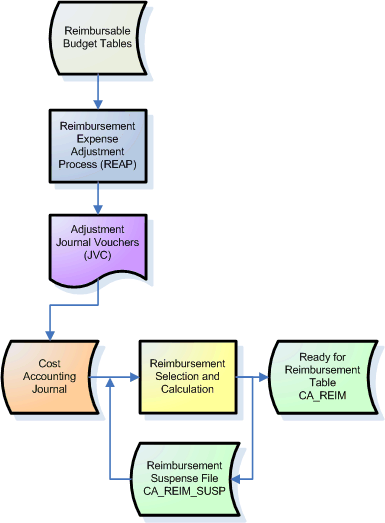
Reimbursable Budget structures are a key feature to supporting the tracking and splitting of program costs. The Award Amount on Level 1 of the structure exerts control of program costs across all funding sources within a Funding Priority. On Level 2 of the structure, the Award amount reflects the maximum amount that may be billed to that funding source. However, the Award Amount on Level 2 may be exceeded due to rounding by the split processor. If a reimbursement limit is exceeded, the resulting reimbursement request may be denied by the funding source when it exceeds that limit even by a penny.
Currently there is a process (Reimbursement Expense Adjustment Process – REAP) which helps to prevent the creation of a reimbursement request that exceeds the reimbursement limits by:
Providing a reporting mechanism to identify reimbursable budget lines where awarded amounts at the funding line level do not reflect Funding Line table setup and where the amount of costs at the funding line level exceeds the awarded percentage.
Creating a corrective transaction (via a JVC Document) if the Award Amount has been exceeded in a manner that provides a complete audit trail and is reflected in the reimbursement request.
In turn, Reimbursable Expense Adjustment is the process which identifies reimbursable budget records (lines) that will potentially result in a reimbursement request that exceeds the award amount. See the Funding Line Smoothing section for more details on the purpose behind the creation of the REAP process.
The complete Reimbursable Expense Adjustment process has 4 steps: