Cost Allocation allows a flexible, user-defined allocation of indirect costs or revenues. Users define an allocation structure from which the system computes and posts the allocation of costs or revenues to the resulting accounting distributions (for example, Fund, Agency, Organization, Activity, Program, etc). The Cost Allocation method is driven by the concept of allocating costs and revenues from user-defined pool accounting distributions to user-defined base accounting distributions. At the time indirect costs are initially recorded in the system, the programs to which those costs should be recorded are not always known. Instead, those costs are initially recorded against 'pool’ accounting distributions. At a later stage, those costs can be re-allocated to the actual programs that should be charged.
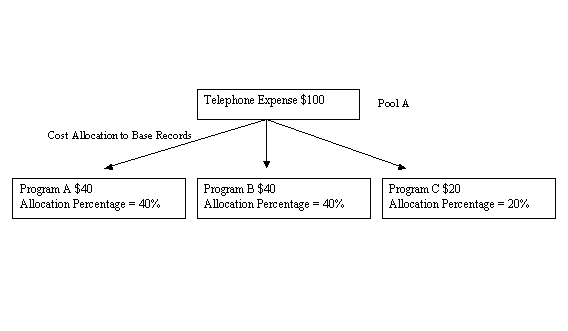
The Cost Allocation method is a dollar-for-dollar allocation of indirect costs. Monies are initially recorded to 'pool’ accounting distributions. For example, a disbursement document accounting line may represent a 'pool’ accounting distribution. An example of the pooling of costs in one distribution that are later to be re-allocated are telephone expenses. A variety of projects may be using the same telephone line, but when the telephone expense is initially recorded in the system, that expense is recorded against one pool program, as it has not been determined how the expense should be distributed across the various programs. As part of Cost Allocation setup, the method for allocating the telephone expense is defined. The Cost Allocation Process is run to allocate the costs to the various 'base’ programs. For example, costs may be allocated as follows:
This is a very simple scenario where the allocation step involves distribution from one pool to three base distributions.
Indirect costs, also known as overhead costs, are those that cannot be attributed to the benefiting entities at the time of payment or cash processing. Examples of indirect or overhead costs are telephone bills, maintenance expenses, rent, electricity, insurance, and any other such miscellaneous/administrative expenses not easily assigned to the proper benefiting or target accounting funding stream.
CGI Advantage Financial provides two methods for performing the post-payment distribution or application of indirect costs back to the benefiting/target entities to support full cost reporting. These are:
Cost Allocation Method - Method that prorates indirect costs and revenues according to pre-defined calculation methodology.
Overhead Rate Method - Method that calculates indirect costs as an overhead rate applicable to direct costs.