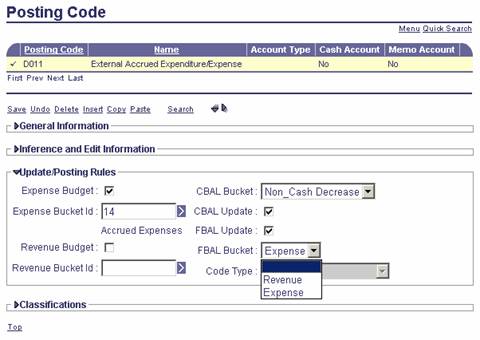
Posting codes are the point at which any updates to the fund balance tables are defined. Two fields control these updates. The first is a flag, FBAL Update. When it is checked, the posting code will invoke update logic. The second is a listing of update types, called FBAL Bucket. Choices include Revenue and Expense. Below is a display of the Posting Code table with the fields mentioned above displayed.
Updates to the Fund balance tables fall into two categories: those that update equity balance sheet accounts defined to a Fund/Sub Fund and those that update accounts that will be closed into equity accounts at Annual Close. This second group represents the most common as updates to many equity accounts tracked as 'available fund balance’ do not get updated any time other than Annual Close. For this reason, fund balance tracking does not include the pending increases and decreases to the actual fund balance accounts like cash balance tracking does with cash accounts.
The ability to track, and optionally control, fund balance availability with items that will eventually reduce or increase a fund’s equity account(s) extends the concept of equity account control to the initial point of document processing instead of waiting until an Annual Close.
Note: If a site chooses to turn off all fund balance tracking, then by unchecking the FBAL Update flag and clearing the FBAL Bucket fields on the Posting Code table will stop all update logic at the point of determining if the posting code should make an update.
Note: Through the selection of what posting codes should update the Revenue and Expense amount fields on the fund balance query tables, the Fund Balance feature can track, and optionally control, at either a modified or full accrual method of accounting.
After the completion of the system-wide setup, which should never be changed for a posting code that has been used as Systems Assurance 2 problems will arise, setup starts at a very low level: Fund and Sub Fund on the Fund Balance Detail Maintenance table.